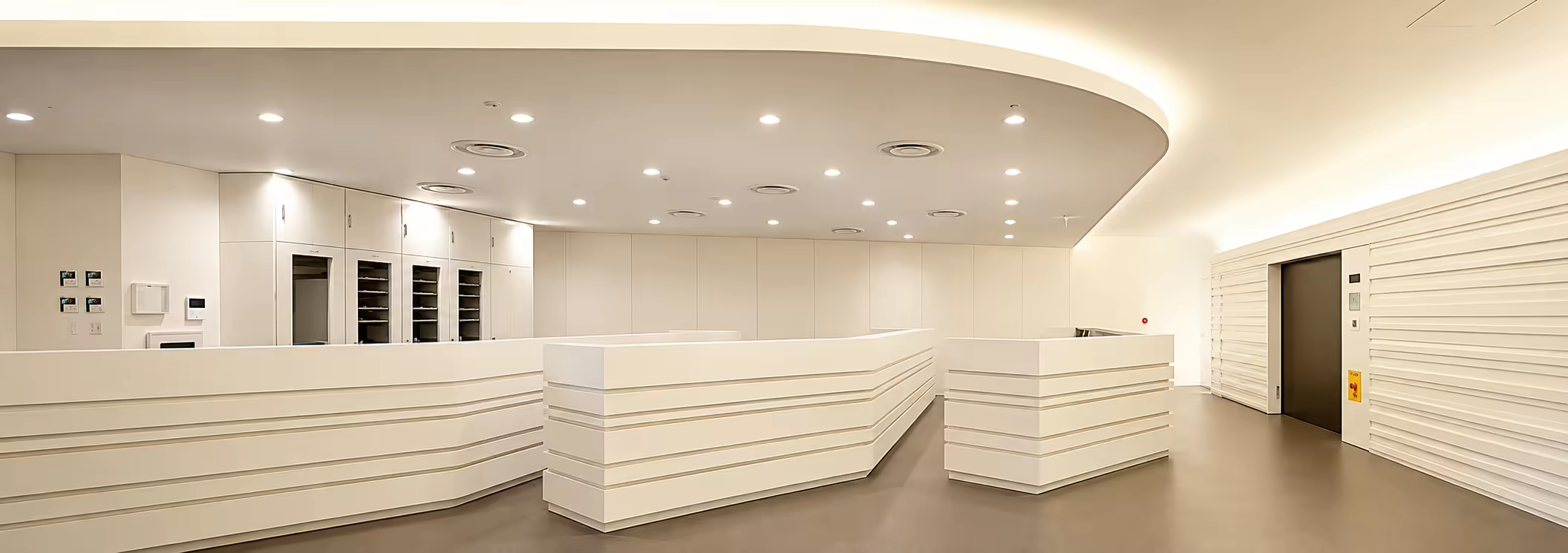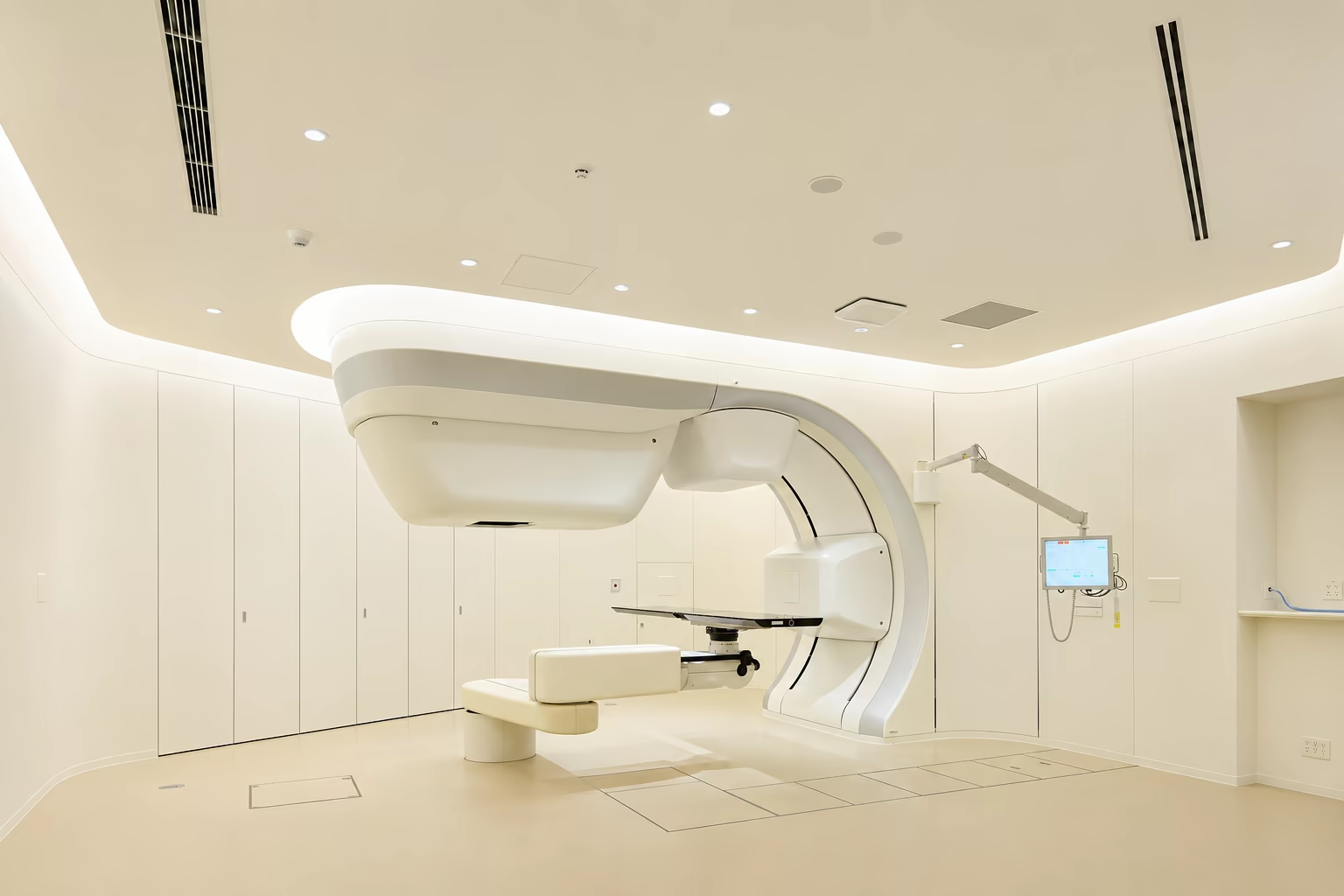
Treatment room and equipment at Osaka Heavy Ion Therapy Center

CANCER CARE / HEAVY ION THERAPYがん治療 / 重粒子線治療

Carbon ions, a considered treatment option.炭素イオンの特性を、 治療の選択肢に。

Radiotherapy that uses carbon ions to concentrate dose at a tumor. Explore how it works, how it differs from proton therapy, treatment schedules, and conditions that may be considered.炭素イオンを用い、腫瘍に線量を集中させる放射線治療。仕組みや特徴から、陽子線との違い、治療期間、対象となる疾患まで、ご自身の選択肢を考えるための情報をご紹介します。

Osaka Heavy Ion Therapy Center大阪重粒子線センターTreatment room at Osaka Heavy Ion Therapy Center大阪重粒子線センターの治療室

UNDERSTANDING HEAVY ION THERAPY重粒子線治療を知る

Understand the science. Begin the conversation.原理を知り、 相談への一歩を。

Eight perspectives introduce the Bragg peak, three key features, comparisons between radiation therapies, treatment schedules, conditions considered, and Japan’s experience.ブラッグピークによる線量集中、3つの特徴、放射線治療の比較、治療期間、対象疾患、そして日本の経験。8つの視点から、重粒子線治療をひもときます。

01 / WHAT IS HEAVY ION THERAPY?重粒子線治療とは

The properties of carbon ions, put to work.炭素イオンの性質を、 治療に生かす。

Heavy ion therapy is a form of particle therapy that primarily uses carbon ions.重粒子線治療は、主に炭素イオンを使う粒子線治療です。

A carbon ion has approximately 12 times the mass of a proton. An accelerator supplies its energy, and the beam is delivered to the tumor from outside the body.炭素イオンの質量は陽子のおよそ12倍。加速器でエネルギーを与え、体の外から腫瘍へ向けて照射します。

Treatment uses both a physical ability to concentrate dose at a selected depth and distinctive biological effects on cells.狙った深さに線量を集中できる物理的な特性と、細胞に対する生物学的な作用の両方を治療に利用します。

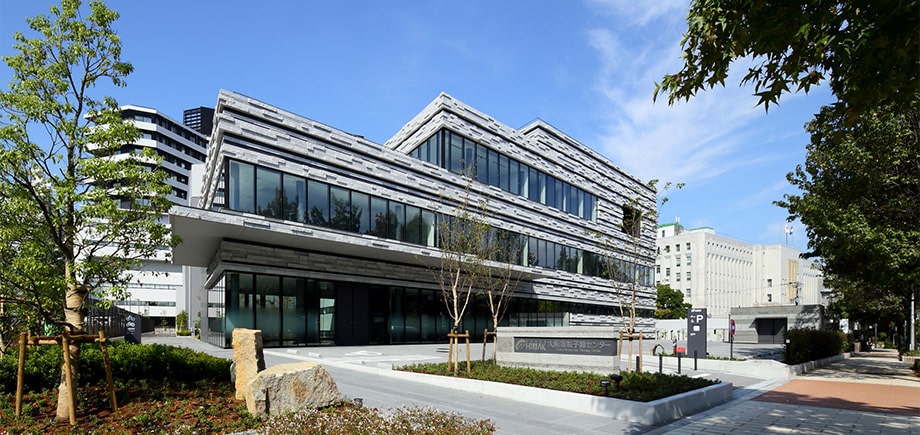
Exterior of Osaka Heavy Ion Therapy Center
Exterior of Osaka Heavy Ion Therapy Center大阪重粒子線センター 外観
  • Carbon-ion beams炭素イオンを使用
  • Approximately 12× proton mass陽子の約12倍の質量
  • External-beam treatment体外から腫瘍へ照射

02 / THE BRAGG PEAKブラッグピーク

Bring the dose peak to the tumor’s depth.腫瘍の深さに、 線量のピークを。

The Bragg peak describes the high energy deposition just before a charged particle stops.粒子が止まる直前にエネルギーを多く放出する性質を「ブラッグピーク」と呼びます。

Beam energy is adjusted to match the tumor’s depth. Combining energies creates a spread-out Bragg peak (SOBP) that covers the tumor’s thickness.ビームのエネルギーを調整し、ピークの位置を腫瘍の深さに合わせます。複数のエネルギーを組み合わせた拡大ブラッグピーク(SOBP)で、腫瘍の厚みもカバーします。

Dose falls sharply beyond the peak. Carbon ions leave a small fragmentation tail, so treatment planning accounts for nearby organs as well as the target.ピークより奥では線量が急激に減少します。炭素イオンでは核破砕による少量の尾部線量が残るため、周囲の臓器を含めて治療計画を立てます。

Radiation dose線量
Depth in the body体内の深さ
Bragg peakブラッグピークTumor depth腫瘍の深さ
Schematic dose distribution線量分布の模式図

03 / THREE KEY FEATURES3つの特徴

Biological effects. Precision in delivery.生物学的な作用と、 照射の精度。

Carbon-ion biology, dose concentration, and reproducible positioning work together in treatment.炭素イオンの作用、線量の集中、再現性のある位置合わせ。この3つが治療を支えます。

Biological effects on cells細胞に対する生物学的な作用

High-LET (linear energy transfer) carbon ions create dense cellular damage. Treatment may be considered for selected hypoxic or radioresistant tumors.高LET(線エネルギー付与)の炭素イオンは、細胞内に密な損傷を与えます。低酸素の腫瘍や、放射線が効きにくい一部のがんでも治療が検討されます。

Dose concentrated at the tumor腫瘍へ線量を集中

The Bragg peak and SOBP shape dose to the tumor’s depth and extent, with the aim of limiting exposure of surrounding normal tissues.ブラッグピークとSOBPを利用し、腫瘍の形や深さに合わせて線量を設計。周囲の正常組織への線量を抑えることを目指します。

Planning for reproducible delivery再現性を支える治療計画

Immobilization and image-guided positioning help reproduce the planned setup. Deep or complex lesions require planning that also accounts for organ motion and nearby tissues.固定具と画像による位置合わせを組み合わせ、毎回の照射位置を確認します。深い部位や複雑な形の病変も、臓器の動きや周囲の組織を含めて計画します。

04 / PROTON OR CARBON ION?陽子線との使い分け

Let diagnosis and treatment goals guide the choice.病状と治療の目的から、 適した方法を考える。

Both proton and carbon-ion therapies use the Bragg peak. Selection also considers tumor histology, previous treatment, and the planned dose distribution.陽子線も重粒子線もブラッグピークを利用します。治療を選ぶ際は、線量分布だけでなく、病理診断や治療歴も合わせて評価します。

Carbon ions炭素イオン線

Tumor depth腫瘍の深さTissue beyond the tumor腫瘍の先の組織
Radiation dose線量
A small dose tailわずかな線量の尾
Beam entrance入射位置Depth in the body体内の深さ
Bragg peakブラッグピーク
Schematic dose distribution線量分布の模式図

Carbon ions: dose concentration with a high biological effect.炭素イオン線:線量集中に加え、高い生物学的作用が特徴です。

Protons陽子線

Tumor depth腫瘍の深さTissue beyond the tumor腫瘍の先の組織
Radiation dose線量
A sharp dose falloff急激な線量低下
Beam entrance入射位置Depth in the body体内の深さ
Bragg peakブラッグピーク
Schematic dose distribution線量分布の模式図

Protons: a concentrated dose at tumor depth, with a sharp falloff beyond the peak.陽子線:腫瘍の深さに線量を集中させ、ピークの先で急激に低下します。

These unscaled schematics illustrate dose distribution, not comparative treatment outcomes. Actual dose distributions depend on the treatment plan.線量分布の特徴を示す模式図です。目盛りや治療成績の比較ではありません。実際の線量分布は治療計画によって異なります。

Proton therapy陽子線治療

The Bragg peak supports treatment plans that limit dose to surrounding tissues. An RBE of approximately 1.1 is commonly used.ブラッグピークを利用し、周囲の組織への線量を抑える治療計画を立てます。RBEは一般に約1.1として扱われます。

  • Situations such as pediatric cancer where long-term normal-tissue effects are a major consideration小児がんなど、長期的な正常組織への影響への配慮が重要な場合
  • Selected brain or eye tumors where nearby critical structures require dose assessment脳や眼の腫瘍など、周囲の重要な組織への線量を評価する場合
  • Compared with X-rays and other options using tumor characteristics and dose plansがんの性質と線量分布をもとに、X線治療などと比較して検討

Carbon-ion therapy重粒子線治療

Treatment combines high-LET biological effects with dose concentration. Some conditions are treated with schedules using fewer sessions.高LETによる生物学的な作用と、線量集中の特徴を利用します。一部の疾患では、少ない回数で行う治療計画が用いられます。

  • Selected radioresistant tumors, including certain bone and soft-tissue tumors一部の骨軟部腫瘍など、放射線抵抗性のある腫瘍
  • Difficult-to-treat or recurrent lesions assessed individually, including previous treatment難治性や再発の病変について、既往治療も含めて個別に評価
  • Session counts and duration selected using evidence for the specific disease疾患ごとの根拠に沿って、照射回数や期間を検討

Suitability is not determined by the cancer name alone. Specialists compare stage, histology, location, treatment history, and the available treatment plans.どちらが適するかは、病名だけで決まりません。病期、病理、腫瘍の位置、治療歴と各治療計画を比較して、専門医が判断します。

Explore proton therapy陽子線治療について知る

05 / FIVE POINTS OF COMPARISON5つの視点で比較

Treatment features, from five perspectives.治療の特徴を、5つの視点から。Explore each treatment, one at a time.それぞれの特徴を、 ひとつずつ。

Compare targeting, care for nearby tissue, biological action, suitability, and treatment sessions.狙う場所、周囲への配慮、作用、適応、照射回数を比べる。

Feature比較項目Compare four treatments4つの治療を比較X-raysX線Protons陽子線Carbon ions重粒子線BNCTBNCT
Focusing the dose on cancerがんへの線量集中Beams from several directions, with adjusted intensity複数の方向から照射し、強さを調整Focuses the dose at the cancer’s depthがんの深さに線量を集中Focuses the dose at the cancer’s depthがんの深さに線量を集中Targets cancer cells with a drug and neutrons薬剤と中性子で、がん細胞を狙う
Care for surrounding tissue周囲の組織への配慮Adjusts beam directions and dose distribution照射方向と線量分布を調整Limits irradiation beyond the cancerがんの奥への照射を抑えるUses depth and lateral dose characteristics深さと横方向の分布を生かすRadiation produced by the reaction acts over a cell-sized range反応で生じる放射線は、細胞ほどの範囲で作用
Action on cancer cellsがん細胞への作用RBE and features of the effectRBE・作用の特徴1.01.0RBERBE≈1.1約1.1RBERBE≈2–3約2〜3RBERBE≈4約4A reaction inside cells strongly affects cancer cells細胞内の反応で、がん細胞に強く作用
Poor response to X-rays or recurrenceX線が効きにくいがん・再発Combined with other treatments as appropriate病状に応じて他の治療と併用Considered according to the condition and treatment plan病状と治療計画に応じて検討Uses its strong biological effect in some cancers一部のがんで強い作用を生かすMay be considered for recurrence after radiotherapy放射線治療後の再発でも検討Eligibility is assessed, including for head and neck cancers頭頸部がんなど、適応を確認
Example number of sessions照射回数の目安20–40 sessions20〜40回Conventional treatment example従来法の例≈20–40 sessions約20〜40回Prostate cancer example前立腺がんの例12–16 sessions12〜16回Representative examples代表例Usually 1 session原則1回Irradiation sessions照射回数

BNCTBNCT

Focusing the dose on cancerがんへの線量集中
Targets cancer cells with a drug and neutrons薬剤と中性子で、がん細胞を狙う
Care for surrounding tissue周囲の組織への配慮
Radiation produced by the reaction acts over a cell-sized range反応で生じる放射線は、細胞ほどの範囲で作用
Action on cancer cellsがん細胞への作用RBE and features of the effectRBE・作用の特徴
≈4約4A reaction inside cells strongly affects cancer cells細胞内の反応で、がん細胞に強く作用
Poor response to X-rays or recurrenceX線が効きにくいがん・再発
May be considered for recurrence after radiotherapy放射線治療後の再発でも検討Eligibility is assessed, including for head and neck cancers頭頸部がんなど、適応を確認
Example number of sessions照射回数の目安
Usually 1 session原則1回Irradiation sessions照射回数

Compare five key points5つの視点で比較

Treatment differences, at a glance.治療の違いを、ひと目で。

Discover treatment options through their distinctive strengths.それぞれの強みから、治療の選択肢を知る。

BNCTBNCT

High precision × Strong effect × Very few sessions精密さ × 強い攻撃力 × ごく少数の照射回数

Advanced treatment that targets cancer cells with a strong local effect.がん細胞を狙って、強く攻撃する先端治療。

A drug and neutrons work together to trigger a reaction inside cancer cells.薬剤と中性子を組み合わせ、がん細胞の中で反応を起こす。Its strengths are precise cell targeting and a strong local effect.細胞を狙う精密さと、局所での強い作用が特徴です。

Carbon-ion therapy重粒子線

Strong effect × Fewer sessions強い攻撃力 × 少ない照射回数

Advanced treatment distinguished by its ability to strongly damage cancer cells.強い攻撃力が特徴の先端治療。

Uses carbon ions that have a strong effect on cancer cells.がん細胞に強く作用する炭素イオンを使用。This strength can also be used for some cancers that respond poorly to X-rays.X線が効きにくい一部のがんにも、その強さを生かします。

Proton therapy陽子線

Precision targeting狙う精度

Advanced treatment distinguished by precise targeting.狙う精度が特徴の先端治療。

Concentrates radiation at the cancer’s location and limits irradiation beyond it.がんの位置に放射線を集中させ、その奥への照射を抑える。Its strength is targeting cancer while limiting the impact on surrounding healthy tissue.がんを狙い、周囲の正常な組織への影響を抑えることが強みです。

06 / TREATMENT SCHEDULE治療期間と通院

Understand the schedule. Plan your stay.治療期間を知り、 滞在を計画する。

Plan your stay in Japan around your treatment schedule.治療の日程に合わせて、日本での滞在を整える。

Treatment hall at Osaka Heavy Ion Therapy Center
Treatment hall at Osaka Heavy Ion Therapy Center大阪重粒子線センター 治療ホール

About 3–4 weeks約3〜4週間

Example treatment period治療期間の例

The 12–16-session courses in the supplied overview資料に掲載された12〜16回のコース

12–16 sessions12〜16回

Example session count照射回数の例

Examples for prostate and bone or soft-tissue tumors前立腺がん・骨軟部腫瘍などの例

Usually 4 per week通常週4回

Usual frequency at the Osaka center大阪重粒子線センターの通院頻度

Days and session counts are determined individually治療日と回数は個別に決定

About 5–20 minutes約5〜20分

Beam-delivery time at the Osaka center大阪重粒子線センターの照射時間

Time in the room, including positioning, is about 15–120 minutes位置合わせを含む在室時間は約15〜120分

07 / CONDITIONS CONSIDERED対象となる疾患

Explore conditions by anatomical region.対象となり得る疾患を、 部位から知る。

The conditions and example session counts in the supplied overview are grouped into six anatomical regions.資料に掲載された疾患と照射回数の目安を、6つの部位に分けて紹介します。

Choose a region部位を選ぶ

Head, neck & skull base頭頸部・頭蓋底

  • Head and neck tumors (examples excluding squamous cell carcinoma): 16 sessions頭頸部腫瘍(扁平上皮がんを除く例):16回
  • Skull base tumors / chordoma: 16 sessions頭蓋底腫瘍・脊索腫:16回
  • Mucosal malignant melanoma: 16 sessions粘膜悪性黒色腫:16回

Histology and location criteria apply. The treating center also assesses head and neck squamous cell carcinoma according to its site of origin.組織型と部位に条件があります。頭頸部の扁平上皮がんの扱いも、発生部位に応じて医療機関が確認します。

Thorax胸部

  • Early-stage non-small-cell lung cancer (stages I–IIA): 4, 12, or 16 sessions早期非小細胞肺がん(I〜IIA期):4・12・16回
  • Locally advanced non-small-cell lung cancer (excluding stages I–IIA): 12 or 16 sessions局所進行非小細胞肺がん(I〜IIA期を除く):12・16回
  • Lung metastases (up to 3 lesions): 4, 12, or 16 sessions per site肺転移(3病変以下):1部位あたり4・12・16回
  • Esophageal cancer: 12 sessions食道がん:12回

Assessment includes stage, metastatic status, respiratory motion, and doses to nearby organs.病期、転移の状況、呼吸に伴う動き、周囲の臓器への線量を評価します。

Upper abdomen & digestive organs上腹部・消化器

  • Hepatocellular carcinoma (4 cm or larger): 4 or 12 sessions肝細胞がん(4cm以上):4・12回
  • Hepatocellular carcinoma (under 4 cm): 4 or 12 sessions肝細胞がん(4cm未満):4・12回
  • Intrahepatic cholangiocarcinoma: 4 or 12 sessions肝内胆管がん:4・12回
  • Liver metastases (up to 3 lesions): 4 or 12 sessions per site肝転移(3病変以下):1部位あたり4・12回
  • Pancreatic cancer: 12 sessions膵がん:12回

Assessment includes tumor location, liver function, proximity to the digestive tract, and overall disease status.腫瘍の位置や肝機能、消化管との距離、全身の病状などを確認します。

Pelvis & urinary organs骨盤・泌尿器

  • Prostate cancer: 12 sessions前立腺がん:12回
  • Kidney cancer: 12 sessions腎がん:12回
  • Postoperative pelvic recurrence of colorectal cancer: 16 sessions大腸がん術後の骨盤内再発:16回

For recurrent disease, previous surgery and radiotherapy are included in the assessment.再発例では、過去の手術や放射線治療の内容も含めて検討します。

Gynecology婦人科

  • Cervical adenocarcinoma: 20 sessions子宮頸部腺がん:20回
  • Cervical squamous cell carcinoma (6 cm or larger): 20 sessions子宮頸部扁平上皮がん(6cm以上):20回
  • Melanoma of the vulva, vagina, or uterus: 16 sessions外陰・腟・子宮の悪性黒色腫:16回

Stage and histology are assessed alongside standard treatment options and possible combined therapy.病期や組織型に加え、標準治療との比較や併用も含めて判断します。

Bone, soft tissue & other tumors骨・軟部組織・その他

  • Bone and soft-tissue tumors: 16 sessions骨・軟部腫瘍:16回
  • Lymph node metastases (up to 3 lesions): 12 sessionsリンパ節転移(3病変以下):12回
  • Radioresistant rare cancers: session count determined individually放射線抵抗性の希少がん:照射回数は個別に決定

Rare cancers require individual review of histology and the area that can be treated; the diagnosis alone does not establish suitability.希少がんは診断名だけで一律に判断せず、病理と治療可能な範囲を個別に確認します。

08 / EXPERIENCE IN JAPAN日本の治療経験

Japan’s accumulated experience in carbon-ion therapy.積み重ねられてきた、 日本の重粒子線治療。

1994: carbon-ion clinical trials began in Japan1994年:日本で炭素イオン線の臨床試験を開始

Japan’s treatment experience日本の治療経験

Operating facilities listed in the overview資料掲載の稼働施設数
7facilities施設
Cumulative patients listed in the overview資料掲載の累計治療患者数
Approx. 40,529約40,529例

Figures reproduced from the supplied overview. Its reporting dates are not stated, so these are not current facility or patient totals. A common reporting date for facility and patient figures has not been confirmed.提供資料掲載値(集計時点の記載なし)です。現在の施設数や累積患者数を示すものではありません。施設数と患者数は同一時点の集計と確認されていません。

GLOBAL EXPERIENCE

Facilities and treatment experience worldwide世界の施設と治療経験

Facilities and treatment experience, together in one overview by country and region. Figures are reproduced from the supplied material.国・地域ごとに、施設数と治療経験をひとつの一覧に。提供資料に掲載された数値をご紹介します。

Country / region国・地域Facilities施設数Cumulative patients treated累計治療患者数
Japan日本7Approx. 40,529約40,529例
China中国4Approx. 7,213約7,213例
Germanyドイツ2Approx. 6,726約6,726例
Italyイタリア1Approx. 2,669約2,669例
Austriaオーストリア1Approx. 517約517例
South Korea韓国1A few hundred数百例規模
Taiwan台湾1Approx. 2約2例

CYBERGENE / MEDICAL CONCIERGE

Begin with your own diagnosis.ご自身の病状から、相談を始める。

Tell us about the current diagnosis and previous treatment. We help clarify the information needed for a medical enquiry and can discuss interpretation and accommodation for your visit.現在の診断やこれまでの治療についてお知らせください。医療機関への相談に向けて、必要な情報を確認します。受診に伴う通訳・滞在のご相談も承ります。

Enquire about heavy ion therapy重粒子線治療について相談する